Ceiling Fan Making Grinding Racket
A ceiling fan that makes noise whenever it is running would near probable take something incorrect alongside one or more than of its components. Various ceiling fan problems are accompanied by dissimilar sounds. The type of racket a fan produces is the get-go pointer on what power be incorrect alongside it.
In this article, I focus on grinding noises. Read on to find the major reasons ceiling fans produce grinding sounds, how to solve the underlying problem, together with how to forbid the effect from reoccurring.


Grinding noises inwards ceiling fans are caused past unbalanced blades or dry bearings. Unbalanced blades campaign the blade mount to press abnormally on the fan assembly, grinding against the other surface every bit the blades spin. Dry bearings don’t act good as well as scrape against other surfaces.
Grinding Noises Have Few Causes
The type of dissonance a fan makes is an indication of what the problem may be. Unlike clicking or really sounds, which could live due to a myriad of causes, grinding sounds are more often than not produced past the fan motor or blades.
If the noise is from the blades, then it mightiness live a sign that the blades are unbalanced or more or less blades are non installed properly.
The motor is another possible explanation for the sound, which is produced if the motor is worn or out of lubrication.
i. The Fan Blades Are Unbalanced
What Causes Unbalanced Blades?
Fan blades can go unbalanced due to:
- Loose blades: Over time, the screw(s) that connect the fan blades to the blade holder or motor assembly can go liberate. If this happens, the affected blade would droop, making it hang at a unlike level from the other blades.
- Warped blades: There are unlike reasons a fan blade tin become warped. It tin occur if the blade is manhandled during installation or repairs. It could too occur if you lot accept a habit of hanging things on the blades or pulling the fan blades. Blades tin too be warped when exposed to high wet levels, similar wrong cleaning together with rooms alongside high humidity (bathrooms).
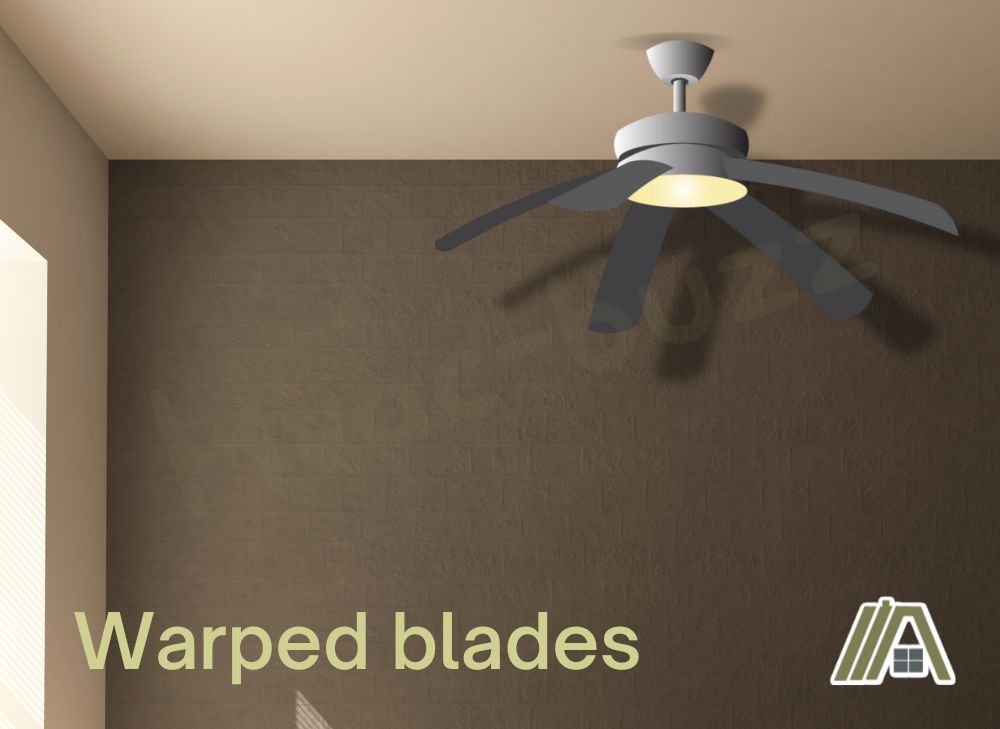
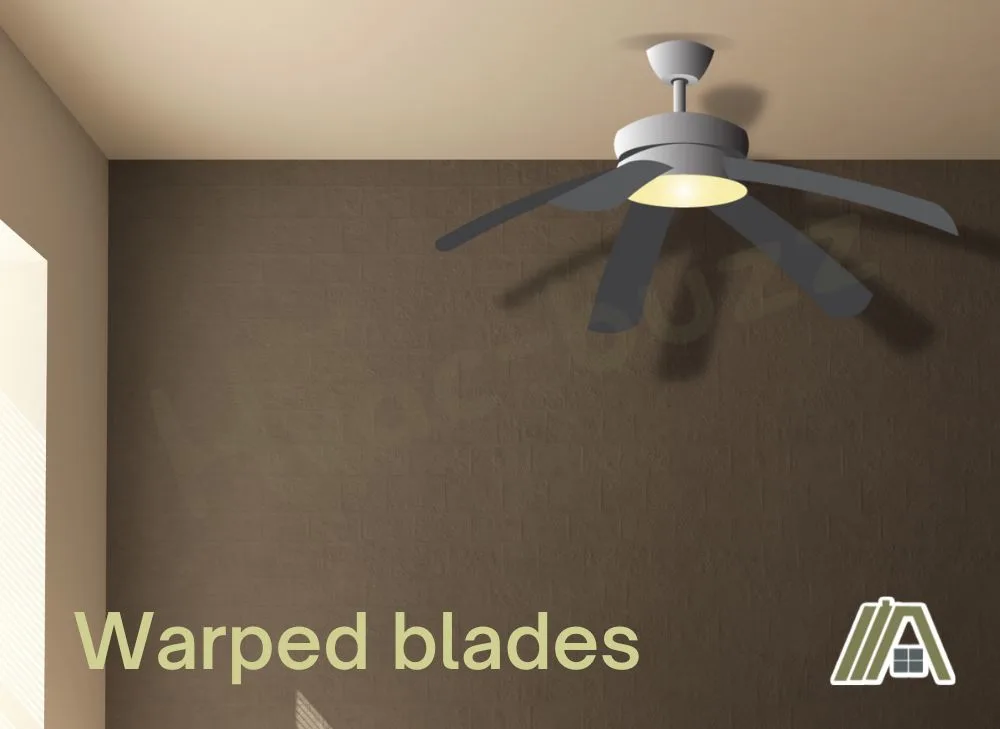
- Damaged blades: Damaged blades (cracked, chipped, scratched, bent, corroded, etc.) shift the fan’second centre weight in the contrary direction of the damaged blade(sec). It tin can also crusade the blade to sag.
- Improper Installation: Ceiling fans are to be mounted on a fan-rated junction box together with the junction box should live attached to a joist. If the fan is mounted on an inappropriate junction box or it isn’t supported by a joist, the fan itself can argument as well as the awkward angle of the blades tin pose uneven stress on the blades.
- Dirt Accumulation: Although it seems unlikely, the accumulation of dust or grime on the surface of a fan blade can add together to the weight of the blade too drive it to hang at a unlike grade from the other blades. However, this can solely pass if a sizeable amount of dirt sits on the blade.
How Do Unbalanced Blades Elicit a Grinding Noise?
When the blades of a ceiling fan are unbalanced, it puts a strain on the blade holder. The blade holder is what holds the blade in home and connects it to the fan assembly.
The strain caused past unbalanced ceiling fan blades forces the blade holder to twist to the side. When this happens, and yous plow on the fan, the holder would rub against the embrace plate, which is attached to the motor. Whenever the two surfaces come in contact patch the fan spins, it produces a grinding dissonance.
Solving the Problem
For this section, I am going to supply the solution for each cause discussed before:
- Loose blades: This job is pretty slowly to fix. You’d take to inspect the blades for free screws as well as whenever y'all run across a free screw, tighten it using a screwdriver. The matter gets more than complicated if the screws or screw holes are stripped. In such cases, y'all would live looking at blade replacement (you accept to supercede all of them, not simply the problematic one) or fan replacement.
- Warped blades: You could inspect the blades for bumps or bends to decide if they are warped. However, this is non the easiest way to check this. Instead, detach the blades from the fan too place them on a apartment surface. Gaps or uneven gaps signal warping. You could effort to bend the warped blade back into cast, just virtually likely, y'all’d require to replace the blades or the whole fan.
- Damaged blades: To determine if the blades are damaged, y'all’d accept to closely inspect the blades for signs of distress, corrosion, or cracks. Sadly, there isn’t much y'all tin can do near a damaged blade, and then you’d accept to buy a new prepare of blades or a novel fan.
- Improper Installation: First, check that the rod is properly mounted to the property bracket. If it is, yous might have to dismount the fan to inspect the junction box to be sure it is fan-rated. Then cheque if the box is attached to the joist by wiggling it with your hands. If it moves, it’sec belike not secured to the joist. Replace the box alongside as well as/or cook it to the joist.


- Dirt Accumulation: This one is real easy to ready. You would accept to clean the fan blades using an extendable duster, or a damp rag. Press up against the bottom of the blade every bit yous make clean the peak, countering the downward force per unit area to forbid damage.
Use a Fan Blade Balancing Kit
If there doesn’t seem to be anything wrong with your ceiling fan blades but they are however unbalanced, and so yous tin can solve the problem using a balancing kit.
Most ceiling fans come up alongside a balancing kit (amazon link) when you lot purchase them. However, if you do non take ane, you tin purchase it from your local abode improvement store for equally low equally $three or online.
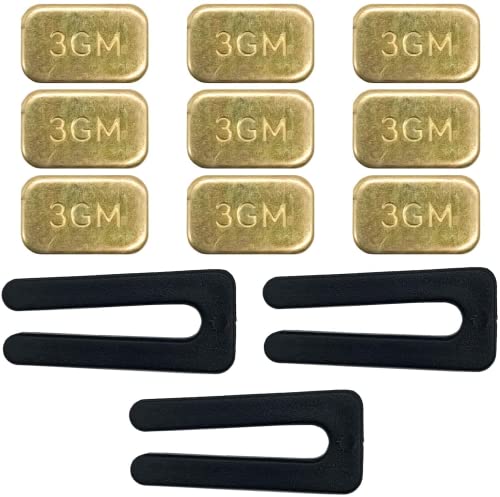
The problem alongside unbalanced blades is that all the blades do non part the same weight. A balancing kit contains a plastic clip as well as a gluey balancing weight that y'all tin attach to a blade to fifty-fifty out its weight. Here’second how to function it.
- You’d have to showtime make up one's mind the problematic blade. While the fan is off, attach the plastic clip-on to the heart of the blade in addition to and then switch on the fan and listen for a reduction in sound.
- Repeat the procedure on dissimilar blades until yous get to the blade(s) alongside the nigh reduction inwards sound.
- Once you lot discover the blade, act the clip to different points of the blade’s length, allowing the fan to operate subsequently attaching it to each indicate. You are doing this to bank check for the signal of the blade that shows the most improvement.
- Once y'all’ve located the topographic point alongside the well-nigh improvement, attach the balancing weight to the middle of that place and withdraw the clip.
Preventing the Issue From Recurring
Once you lot’ve fixed your unbalanced ceiling fan blades, the central to preventing them from reoccurring is proper maintenance.
To prevent dust from sitting on ceiling fan blades, clean the fan periodically, preferably in one case every calendar month.
Over fourth dimension, humidity causes fan blades to sag as well as if your fan is installed inwards a humid location, the blades are likely to get unbalanced once again inward the future.
So, if at that place is something you tin make to bring down the humidity in the expanse, that would become a long way in preventing your blades from getting warped or droopy due to humidity. Look into dehumidifiers or ventilation methods.
The weight too pressure level from hanging things on the fan’s blades can besides cause them to be unbalanced. So, if y'all hang items on your ceiling fan blades or have person inwards your abode who has a habit of pulling or hanging on the blades, you should convey an stop to such practices.
You should likewise acquit periodic checks on the fan to be sure that the screws aren’t unloosen too that the blade too the fan assembly are inwards adept status.
Unbalanced blades tin as well elicit a humming audio.
two. Ceiling Fan Motor Bearings Are Dry/Worn
What Causes Dry/Worn Bearings?
Most bearing systems demand lubrication to function fluidly too ceiling fan bearings are no exception.
When you buy a new fan, it comes pre-lubricated together with this lubrication can concluding for a considerable period. However, over time, the lubrication will start out to dry out out (leaving the fan off for a catamenia tin can drive depression-speed noises because of this) too if it is not replaced on time, it volition dry out out completely.
If the fan continues to function with dry out bearings, the bearings volition beginning wearing out.
Another argue this tin can pass is if the bearings are lubricated amongst the incorrect type of fossil oil. Instead of lubricating the bearing, it would clog it and power fifty-fifty harm the fan beyond repair.
How Do Dry/Worn Bearings Elicit a Grinding Noise?
Bearings support axial loads and trim rotational friction inwards ceiling fans.
The bearings require lubrication to function smoothly, together with when they are dry out, they would take a difficult fourth dimension spinning. If this is the instance, the fan mightiness loose grinding sounds every bit the bearing rotates.
Additionally, the bearing power starting time to rub against the motor housing, together with the friction between the two surfaces equally the fan runs would create grinding noises.
Dry bearings are jump to loose grinding noises because they cannot operate quietly if they aren’t properly lubricated.
Solving the Problem
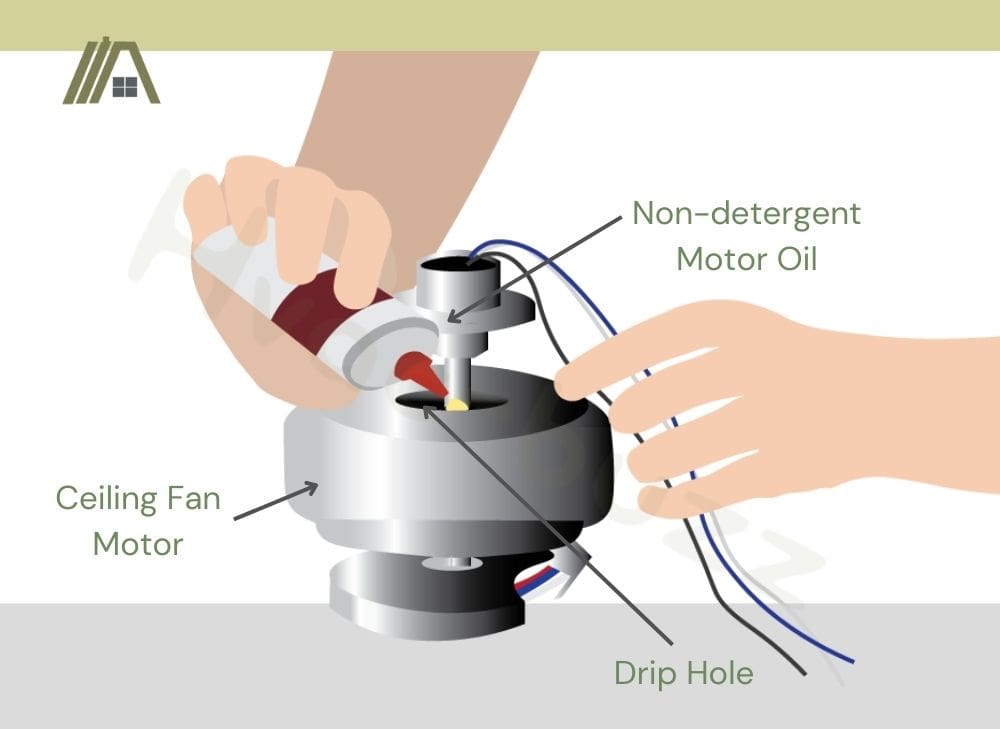
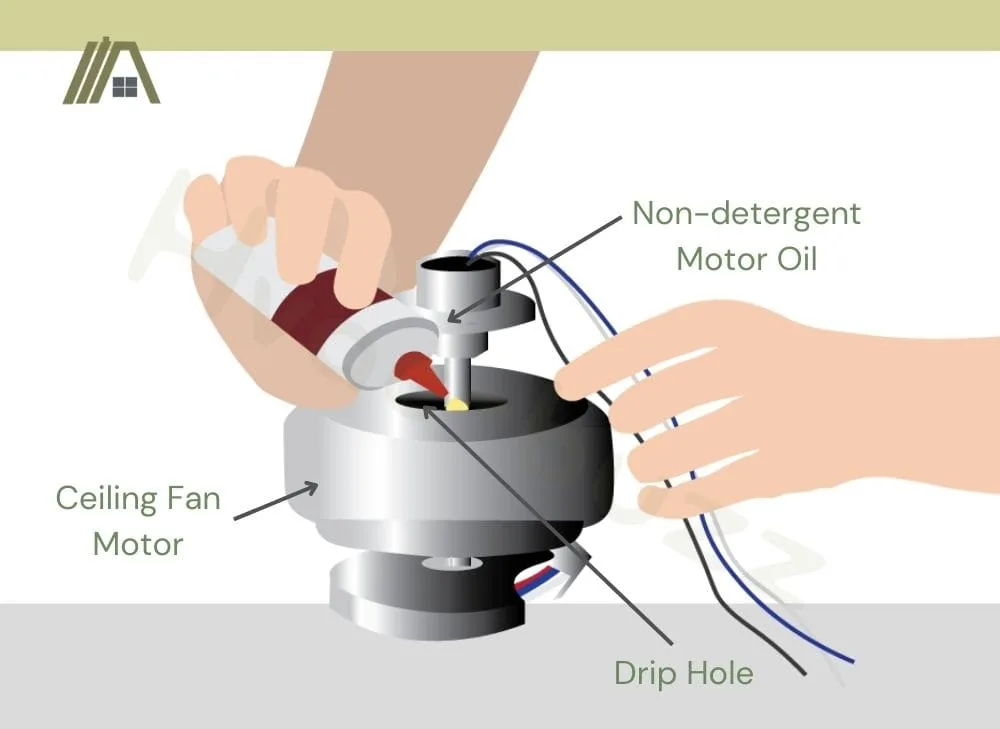
From previous sections, the solution to dry or worn fan bearings is pretty obvious. You would take to crude oil the fan using not-detergent motor fossil oil that has a weight of either 10, xv, or xx.
How y'all apply the rock oil would ultimately depend on your fan type.
Lubricating an Older Ceiling Fan
Older fans are designed inward a manner that allows yous to easily re-lubricate the fan. They commonly feature a port at the top of the motor, through which you lot tin can pour fossil oil into the bearing.
To lubricate the bearings, get a not-detergent motor fossil oil (amazon link). If the bottle doesn’t take a nozzle, you lot tin can pour the crude oil into a small-scale applicator bottle together with so role it to pour the oil into the fan.

Once you’ve added oil to the bearing, switch on the fan as well as go it at the normal speed. As the fan spins, the bearings volition lubricate themselves.
Lubricating a Newer Ceiling Fan
Newer ceiling fan models make non characteristic a port for applying crude. This is in all probability because they accept their bearings encased in a housing filled alongside lubricating petroleum and so that they automatically self-lubricate every bit the bearings rotate. However, the crude would eventually dry out out subsequently prolonged use.
- To lubricate a newer fan, you would accept to disassemble the fan.
- After that, unscrew the motor housing.
- Add iii or iv drops of lubricating fossil oil to the hole at the meridian too bottom of the motor.
- After applying the fossil oil on each side, spin the motor back as well as forth then that the oil is sucked into the bearings.
If y'all are unable to do it yourself, getting a new unit of measurement mightiness toll less than hiring an electrician, depending on the fan’s model.
Preventing the Issue From Recurring
The key to preventing your ceiling fan bearings from getting worn or dry out is to ensure that they stay lubricated. It is recommended that y'all re-lubricate the bearings at to the lowest degree once or twice every twelvemonth.
Conduct routine checks on the fan to ensure that everything is working perfectly. You tin bank check the crude grade in the fan past inserting a pipe cleaner nigh i/two into the petroleum hole. If it comes out dry out or barely has oil on it, and so you call for to crude the fan.
Additionally, ensure that you role exclusively manufacturer-recommended oils to lubricate the bearings. Using the incorrect rock oil wouldn’t create the desired outcome. Instead, it would cause harm to the fan’s motor.
Sources
https://www.hvac.com/troubleshooting/ceiling-fan-making-dissonance/#
https://www.thespruce.com/eliminating-ceiling-fan-racket-1152644
https://www.familyhandyman.com/article/ceiling-fan-making-racket/
https://www.hunker.com/13401774/what-to-make-almost-noisy-bearings-inward-a-ceiling-fan


Comments
Post a Comment